Fitment
Identify the vehicle platform and year, bolt pattern, center bore, offset, width and diameter. A tire and suspension change can alter the clearance picture, so include those details too.
A useful wheel inquiry starts with the interface and ends with an agreed set of review points. Bring existing drawings or partial information; the first step is identifying what remains to be confirmed.
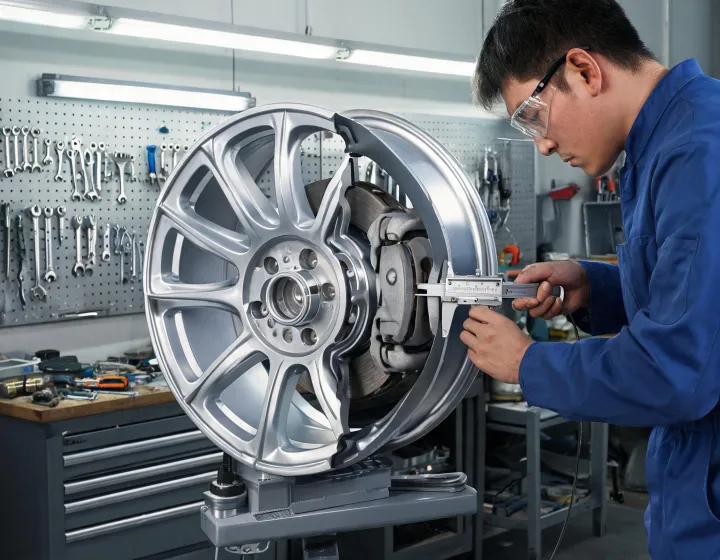
Identify the vehicle platform and year, bolt pattern, center bore, offset, width and diameter. A tire and suspension change can alter the clearance picture, so include those details too.
Agree the load and duty, sample needs and acceptance criteria. Separate dimensional checks from performance testing so each question has an owner.
Specify which drawings, test reports and installation information should accompany the review. Applicability depends on the product and destination market.
Discuss revision and lot identification requirements before a production or distribution program is defined.
Wheel mounting surfaces, hub interfaces and brake clearance need to be considered as a system. A nominal diameter alone does not establish compatibility.
Load rating, test method and duty cycle should be matched to the intended application. Ask which evidence applies to the exact configuration under consideration.
Request by configuration
No. Center bore, offset, fastener seat, brake clearance and load also need review against the vehicle.
That depends on the wheel, application and destination. Request the relevant evidence rather than assuming one standard covers every market.
Send the available specifications and the questions you need answered.